Showing 17–32 of 35 results
-
0 out of 5
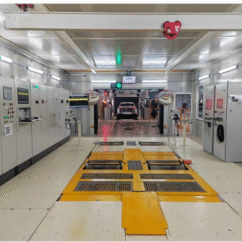
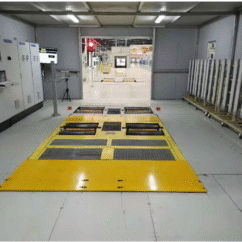
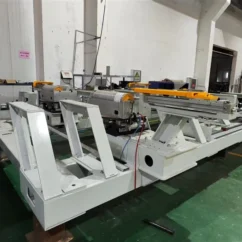
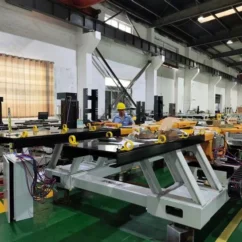
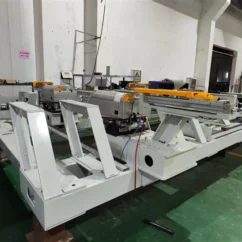
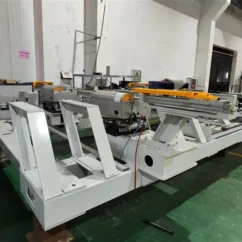
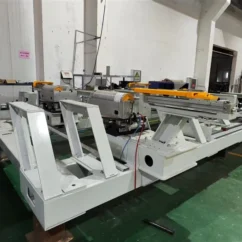
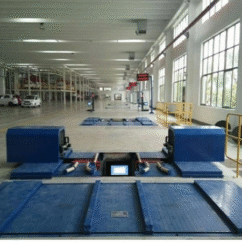
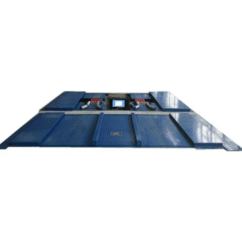
The structure of the test bench is mainly composed of a bracket, a large mobile base, a moving guide rail, a basic frame, a motor, a reduction wheel, a hub assembly, a pneumatic lifting device, a speed sensor, a displacement sensor, a frequency converter and other components.The drum test bench uses the electric inertia to simulate the kinetic energy of the vehicle on the road, and can withstand the load of the vehicle at the maximum acceleration and deceleration. Rotary drum warp good dynamic balance. It has the following functions:Dynamic driving brake force test: the car drives the drum. When the speed of the car reaches 80 km/h (the speed can be set by the user), brake until the car stops, and measure the dynamic driving braking force during the deceleration process.Astern test test (open or close as required).Acceleration performance (on or off as required)Automatic transmission testing and diagnostics, communication with the automotive ECU, according to test specifications (open or close as required).A safety drum protection device is installed at the rear of the rear drum group to prevent the vehicle from running out of the test stand during the test. In order to facilitate vehicle access to the test bench, a pneumatic lift is installed in the middle of each pair of rollers.
Using electric inertia to simulate the equivalent kinetic energy of a vehicle on the road, it can withstand the load of the vehicle during maximum acceleration and deceleration. The drum has good dynamic balance. It has the following functions: Braking force inspection (including the function of the brake table) display result summary and braking force curve, vehicle offline ABS/ESC/EPB test, display result summary and process curve, upshift/reverse performance test, coasting dynamic braking performance test (optional test items), speedometer test, sound level test (integrated), electric vehicle energy recovery test, air conditioning temperature test (integrated), brake pedal force and manual operation force test (optional test items)
-
0 out of 5
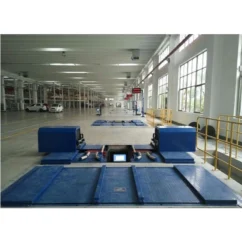
Automobile loading brake test bench is a roller reaction brake bench with loading function, with all functions of roller reaction brake table and axle load meter.
-
0 out of 5
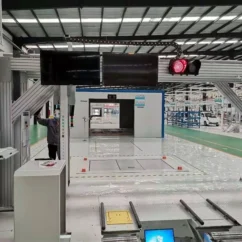
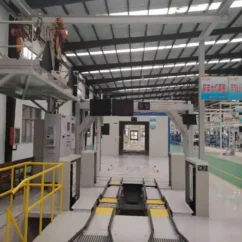
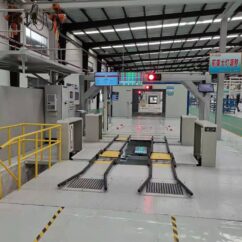
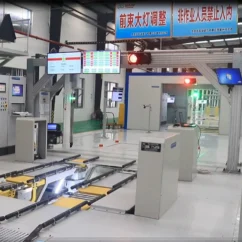
The non-contact four-wheel positioning instrument is a special device used to measure and adjust the wheel positioning of the assembled vehicle. Through the positioning instrument, the four-wheel positioning of the vehicle is located and measured/judged to ensure that the wheel positioning meets the design parameters and requirements.
Wheel weight, toe in and camber of wheels, inspection of main pin camber, camber, thrust angle, and maximum steering angle, calibration of toe in and camber, automatic collection and calibration of wrench torque to a specified database, and optional wheel arch inspection function.
Innovative advantages: Exclusive invention patents leading the world, side cameras added to the front wheels and targets added to the rear wheels, automatic calibration of the zero point value of the rear wheel sensors after changing the wheelbase, eliminating initial errors and ensuring accurate measurement results.
Exclusive innovative wheelbase adjustment mechanism ensures that the wheel rotation center coincides with the drum group rotation center, accurately measuring the maximum steering angle.
-
0 out of 5
The non-contact four-wheel positioning instrument is a special device used to measure and adjust the wheel positioning of the assembled vehicle. Through the positioning instrument, the four-wheel positioning of the vehicle is located and measured/judged to ensure that the wheel positioning meets the design parameters and requirements.
Wheel weight, toe in and camber of wheels, inspection of main pin camber, camber, thrust angle, and maximum steering angle, calibration of toe in and camber, automatic collection and calibration of wrench torque to a specified database, and optional wheel arch inspection function.
Innovative advantages: Exclusive invention patents leading the world, side cameras added to the front wheels and targets added to the rear wheels, automatic calibration of the zero point value of the rear wheel sensors after changing the wheelbase, eliminating initial errors and ensuring accurate measurement results.
Exclusive innovative wheelbase adjustment mechanism ensures that the wheel rotation center coincides with the drum group rotation center, accurately measuring the maximum steering angle.
-
0 out of 5
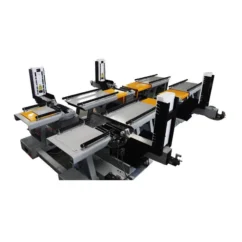
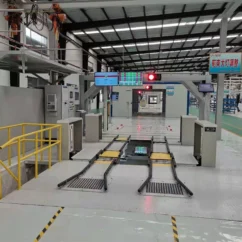
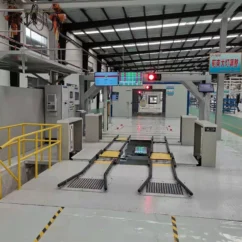
The non-contact four-wheel locator is an advanced automotive diagnostic device that uses laser and sensor technology to measure four-wheel positioning data without contact with the car tire or steel rim. Its main components include model and function selection device, ground operation display, 3D laser CCD sensor assembly, pit display device, pit lighting and ventilation device, vehicle centering device, vehicle positioning device, wheelbase adjustment device, driving guidance device, PLC electrical control cabinet, steering wheel positioning device, computer hardware and software system, etc . Compared with the traditional four-wheel locator, this device has higher measurement efficiency and lower failure rate, while avoiding damage to the rim in the measurement process, reducing the work intensity and improving the measurement accuracy . The launch of the non-contact four-wheel positioning instrument marks the further development of automotive diagnostic technology and indicates the change of the future automotive maintenance industry .
-
0 out of 5
The non-contact four-wheel locator is an advanced automotive diagnostic device that uses laser and sensor technology to measure four-wheel positioning data without contact with the car tire or steel rim. Its main components include model and function selection device, ground operation display, 3D laser CCD sensor assembly, pit display device, pit lighting and ventilation device, vehicle centering device, vehicle positioning device, wheelbase adjustment device, driving guidance device, PLC electrical control cabinet, steering wheel positioning device, computer hardware and software system, etc . Compared with the traditional four-wheel locator, this device has higher measurement efficiency and lower failure rate, while avoiding damage to the rim in the measurement process, reducing the work intensity and improving the measurement accuracy . The launch of the non-contact four-wheel positioning instrument marks the further development of automotive diagnostic technology and indicates the change of the future automotive maintenance industry .
-
0 out of 5
The equipment is a special equipment used to measure and adjust the wheel positioning of the assembled vehicle. It locates and measures/judges the four wheels of the vehicle through the positioning instrument to ensure that the wheel positioning meets the design parameters and requirements.According to the model 18-bit code to determine the model, the software can set whether to adjust the rear wheel, and directly adjust the front wheel for the model that does not need to adjust the rear wheel; For models that need to adjust both front and rear wheels, adjust the front wheels after completing the rear wheel adjustment.
-
0 out of 5
The century-old evolution of four-wheel aligners: from cable to non-contact From the cable positioning in 1915 to the present non-contact four-wheel positioning device, the development of four-wheel positioning technology has experienced a century of changes. Let’s review the process. 1️⃣ 1915: The initial four-wheel positioning was using a cable positioning, which took longer and was less accurate. 2️⃣ Light locator: With the progress of technology, light locator has gradually replaced the cable positioning, improving the speed and accuracy of measurement. 3️⃣ cable computer locator: Into the computer era, the appearance of cable computer locator makes four-wheel positioning more intelligent and efficient. 4️⃣ laser positioning: with the introduction of laser technology, the accuracy and speed of four-wheel positioning have been improved again. 5️⃣ CCD positioning: The use of CCD technology makes the measurement of four-wheel positioning more accurate and stable. 6️⃣ 3D positioning: The application of 3D technology makes the four-wheel positioning can be more comprehensive measurement and analysis. 7️⃣ non-contact four-wheel locator: the latest non-contact four-wheel locator is not only fast, but also more accurate, which provides great convenience for vehicle repair and maintenance. From the initial cable positioning to the current non-contact four-wheel positioning device, the development of four-wheel positioning technology not only improves the efficiency of measurement, but also improves the accuracy of measurement, and provides important technical support for vehicle maintenance and maintenance.
-
0 out of 5
The sideslip is a kind of equipment used to detect the positioning of the front wheel of the vehicle, mainly used to detect whether there is lateral slip during the running of the vehicle. By measuring the lateral displacement of the tire, the sideslip can judge the handling stability of the vehicle and the correct positioning of the front wheel.
-
0 out of 5
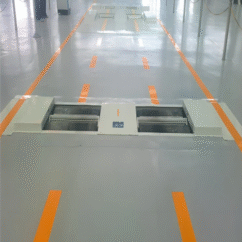
The high-speed ABS brake test bench is capable of testing the braking force of each wheel, the braking difference between the left and right wheels of each axle, the braking force of each wheel, the parking braking force test, the pedal force and hand tension test, and the wheel weight and axle weight test of the vehicle.
-
0 out of 5
Wheel rotation simulation driving state: the detection results are consistent with road driving.
Save manpower, do not need to manually install four rounds of fixtures
-
0 out of 5
Wheel rotation simulation driving state: the detection results are consistent with road driving.
Save manpower, do not need to manually install four rounds of fixtures
-
0 out of 5
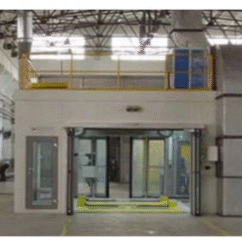
The frame of the house is welded with I-steel, the column is welded with I-steel, and the beam structure is welded with I-steel. The walls of the house body are spliced with soundproof panels; The square steel pipe of the frame body is embedded in the inner side of the sound insulation board and connected by bolts.
-
0 out of 5
The automobile Angle test bench is a special equipment for detecting and adjusting the steering Angle of the automobile front wheel. The integrated diagnostic equipment is used to test the maximum steering Angle and related values of the steering wheel of the vehicle (that is, the Angle of rotation of the other wheel when the steering wheel is turned to the maximum position).
-
0 out of 5
On the basis of the non-contact 3D laser four-wheel positioning instrument, only the laser measuring device is only replaced with the roller contact measuring device, which reduces the cost and solves the objective demand of some vehicle production enterprises for suitable positioning platform.
-
0 out of 5
On the basis of the non-contact 3D laser four-wheel positioning instrument, only the laser measuring device is only replaced with the roller contact measuring device, which reduces the cost and solves the objective demand of some vehicle production enterprises for suitable positioning platform.