
Vehicle Electrical Inspection
Vehicle electrical inspection is an important part of vehicle testing, which plays a crucial role in ensuring driving safety. The following are the requirements and methods for vehicle electrical inspection, aimed at helping car owners better understand and master this key link. Requirement: 1. Operating standards. For whole vehicle electrical inspection, standardized operation is very important. Operators should follow standard procedures and steps for testing, not be careless or overlook any details. Only by strictly following the specifications can the accuracy and reliability of the test results be ensured. 2. Professional skills. Vehicle electrical inspection requires operators to possess certain professional skills in order to be competent. Therefore, when choosing a repair site, priority should be given to selecting repair institutions with relevant professional skills and qualifications, which can ensure the comprehensiveness and accuracy of the testing, and avoid situations such as missed inspections and misdiagnosis. 3. Instruments and equipment. Conducting a complete vehicle electrical inspection requires the use of various instruments and equipment to test the vehicle’s performance parameters, such as multi-purpose testers, multimeters, oscilloscopes, etc. Therefore, testing institutions must have advanced equipment and complete site conditions to ensure the effectiveness and reliability of testing. Method: 1. Wiring sequence. Firstly, it is necessary to connect various measuring instruments and equipment in accordance with the standard wiring sequence to ensure smooth circuits, and pay attention to the firmness and correctness of wiring. When testing the electronic control module (ECM), it is important to follow the manufacturer’s wiring sequence to avoid damaging the ECM. 2. Testing machine room. The whole vehicle electrical inspection needs to be conducted in a rigorous testing room to avoid external interference affecting the test results. In the testing room, anti-static treatment should be done on the ground to ensure the safety of various electronic components. 3. Repeated testing. When conducting a vehicle electrical inspection, multiple tests should be repeated to confirm the accuracy of the test results. Especially when detecting fault codes, it is necessary to repeatedly test the same fault code to ensure that it is not missed or misdiagnosed. Overall, vehicle electrical inspection is an important part of vehicle testing, which is of crucial importance for driving safety and vehicle maintenance. Only with proper operating procedures, professional skills, and advanced equipment can the accuracy and reliability of the vehicle’s electrical inspection be ensured, making driving safer and smoother for car owners.
Free shipping on orders over $50!
- Satisfaction Guaranteed
- No Hassle Refunds
- Secure Payments
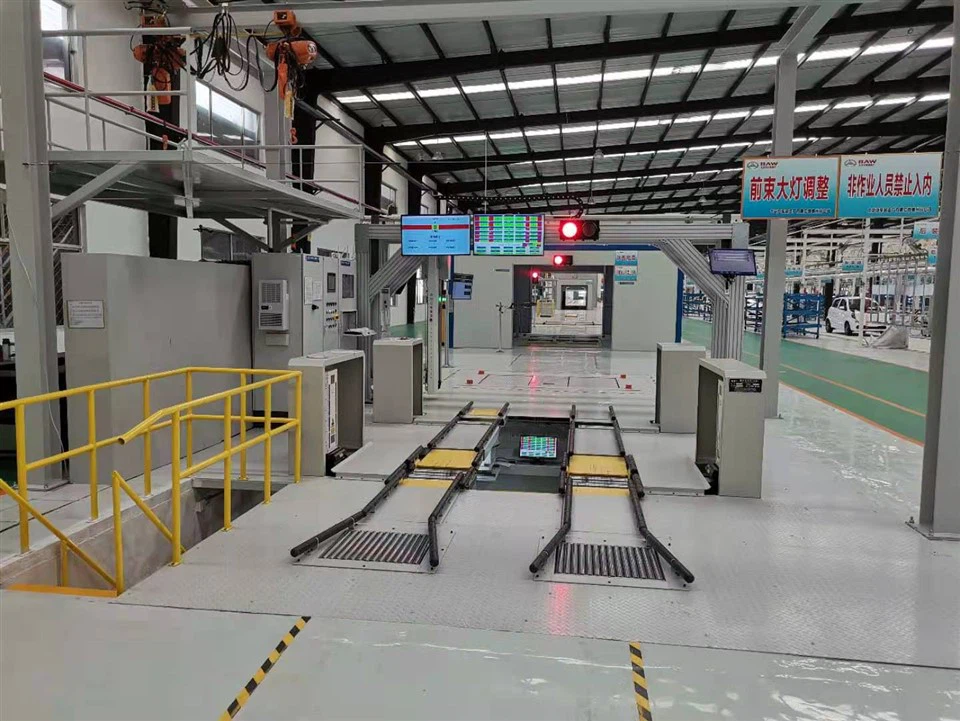
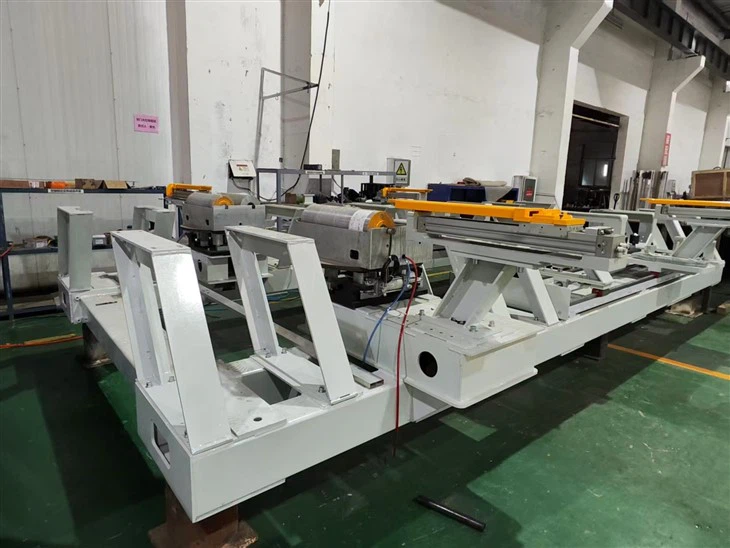
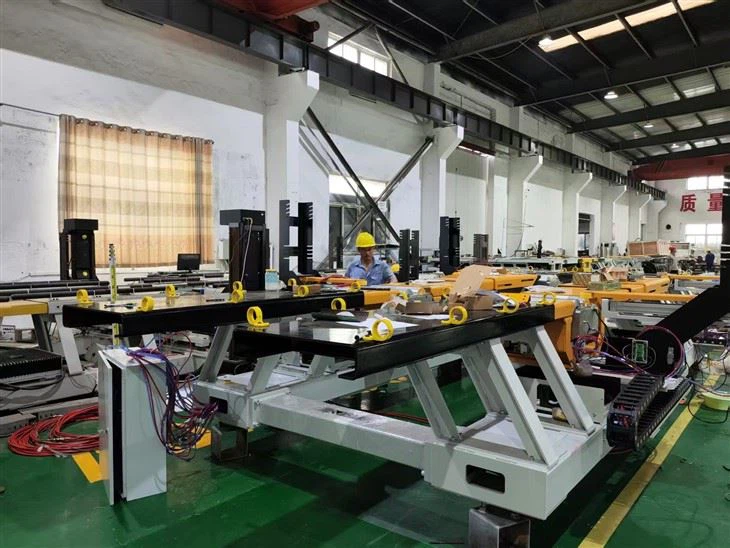
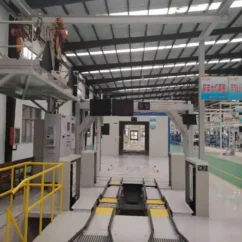
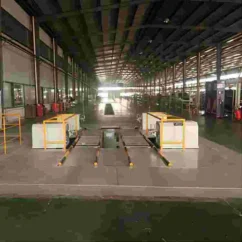
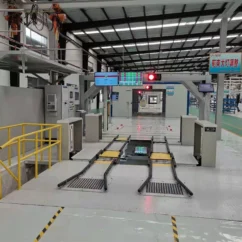
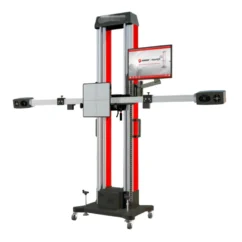
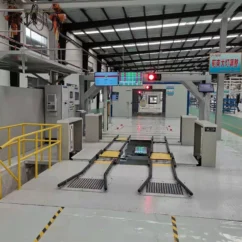
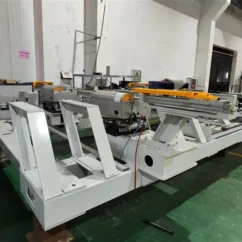
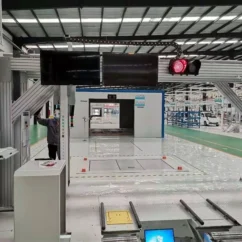
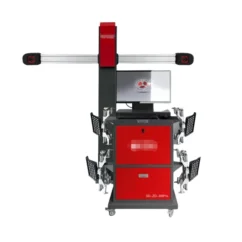
The non-contact four-wheel positioning instrument is a special device used to measure and adjust the wheel positioning of the assembled vehicle. Through the positioning instrument, the four-wheel positioning of the vehicle is located and measured/judged to ensure that the wheel positioning meets the design parameters and requirements.
Wheel weight, toe in and camber of wheels, inspection of main pin camber, camber, thrust angle, and maximum steering angle, calibration of toe in and camber, automatic collection and calibration of wrench torque to a specified database, and optional wheel arch inspection function.
Innovative advantages: Exclusive invention patents leading the world, side cameras added to the front wheels and targets added to the rear wheels, automatic calibration of the zero point value of the rear wheel sensors after changing the wheelbase, eliminating initial errors and ensuring accurate measurement results.
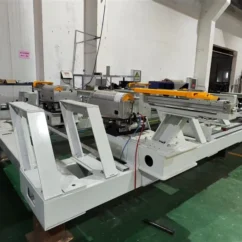
Exclusive innovative wheelbase adjustment mechanism ensures that the wheel rotation center coincides with the drum group rotation center, accurately measuring the maximum steering angle.
Test content:
Front wheel front bundle (left/right), front wheel total front bundle, rear wheel front bundle, front wheel out (left/right), kingpin back tilt, kingpin inward tilt, rear wheel out (left/right), maximum steering Angle, etc. The device can be measured repeatedly by static/dynamic measurement and adjustment, the front bundle and roll out of the wheel, the display in the control cabinet, the display above the front of the car and the operator’s display in the pit to display the measurement value in real time.
Kingpin back tilt Angle, kingpin inner tilt Angle measurement method: random inspection.
Measuring range (accuracy calibrated with static calibration stand):
| Item | Test range | Precision | Repeat accuracy | Remark |
| Front pulley | ±10° | ±1′ | ±0.2′ | 100% detection |
| Wheel roll out | ±10° | ±2′ | ±0.4′ | 100% detection |
| Thrust Angle | ±10° | ±2′ | – | 100% detection |
| Steering wheel Angle | ±10° | ±0.5′ | ±0.5° | 100% detection |
| Kingpin tilted inward | measuring range±20° | – | <±4° | 100% detection |
| Kingpin leans back | measuring range±20° | – | ±0.1° | 100% detection |
| Maximum steering Angle | ±45° | ±0.1° | ±0.1° |


The non-contact dynamic four-wheel positioning instrument adopts the non-contact German visicon laser measurement system and the imaging processing technology of line laser irradiation, which has the characteristics of high measurement accuracy, small repeatability error and stable operation.
The proper axial position of a vehicle’s tires is essential for ensuring safe and smooth driving. To achieve this, our company has developed advanced equipment for detecting the axial position of tires, which boasts outstanding technical features and stable performance.
This equipment is based on high-precision sensors and cutting-edge image recognition technology that can swiftly and accurately detect the wheel’s position. The sensors are placed at the center of the wheel hub, and as the wheel rotates, they collect data on its position. Additionally, the image recognition system analyzes the tire rotation to determine the tire’s displacement.
One of the significant advantages of this equipment is its accuracy. It can determine the axial position of the tire within a range of 0.01 mm, ensuring that each tire is precisely aligned. This accuracy is essential because any misalignment can cause uneven tire wear and negatively impact the vehicle’s performance and safety.
Moreover, our equipment is incredibly versatile and can be used to test vehicles of different sizes, ranging from small passenger cars to large commercial trucks. With our device, accuracy, and speed, we can determine the axial position of each vehicle’s tires within a matter of minutes.
In summary, the advanced equipment we have developed for detecting a vehicle’s tire position is an essential tool for ensuring safe and smooth driving. Its technical features, high accuracy, and speed make it highly reliable and efficient. Choosing our equipment means choosing the best for your vehicle.
Hot Tags: vehicle electrical inspection, China vehicle electrical inspection manufacturers, suppliers, factory, Steering Wheel Test Stand, Gantry Automatic Headlight Aimer, Safety Equipment, Off line Detection Line, Chassis Dynamometer, ADAS
Reviews
There are no reviews yet.