
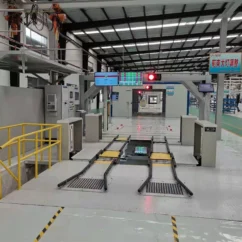

Vehicle Electrical Inspection
Vehicle electrical inspection is an important part of vehicle testing, which plays a crucial role in ensuring driving safety. The following are the requirements and methods for vehicle electrical inspection, aimed at helping car owners better understand and master this key link. Requirement: 1. Operating standards. For whole vehicle electrical inspection, standardized operation is very important. Operators should follow standard procedures and steps for testing, not be careless or overlook any details. Only by strictly following the specifications can the accuracy and reliability of the test results be ensured. 2. Professional skills. Vehicle electrical inspection requires operators to possess certain professional skills in order to be competent. Therefore, when choosing a repair site, priority should be given to selecting repair institutions with relevant professional skills and qualifications, which can ensure the comprehensiveness and accuracy of the testing, and avoid situations such as missed inspections and misdiagnosis. 3. Instruments and equipment. Conducting a complete vehicle electrical inspection requires the use of various instruments and equipment to test the vehicle’s performance parameters, such as multi-purpose testers, multimeters, oscilloscopes, etc. Therefore, testing institutions must have advanced equipment and complete site conditions to ensure the effectiveness and reliability of testing. Method: 1. Wiring sequence. Firstly, it is necessary to connect various measuring instruments and equipment in accordance with the standard wiring sequence to ensure smooth circuits, and pay attention to the firmness and correctness of wiring. When testing the electronic control module (ECM), it is important to follow the manufacturer’s wiring sequence to avoid damaging the ECM. 2. Testing machine room. The whole vehicle electrical inspection needs to be conducted in a rigorous testing room to avoid external interference affecting the test results. In the testing room, anti-static treatment should be done on the ground to ensure the safety of various electronic components. 3. Repeated testing. When conducting a vehicle electrical inspection, multiple tests should be repeated to confirm the accuracy of the test results. Especially when detecting fault codes, it is necessary to repeatedly test the same fault code to ensure that it is not missed or misdiagnosed. Overall, vehicle electrical inspection is an important part of vehicle testing, which is of crucial importance for driving safety and vehicle maintenance. Only with proper operating procedures, professional skills, and advanced equipment can the accuracy and reliability of the vehicle’s electrical inspection be ensured, making driving safer and smoother for car owners.