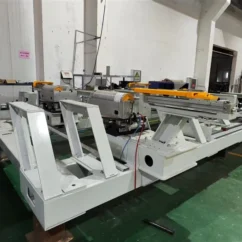
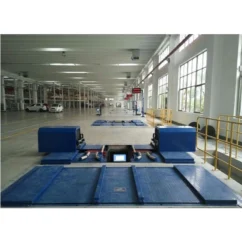
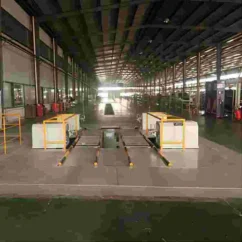
• Automobile Tire Testing Equipment

    Automobile Tire Testing Equipment

    0 out of 5

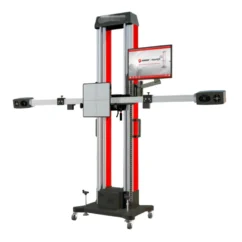
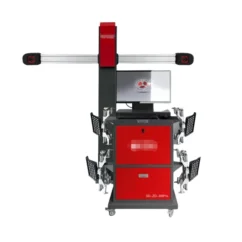
    In the modern automotive industry, 3D laser four-wheel aligners play a crucial role. As automotive technology continues to advance and the design and manufacture of vehicles become more complex, ensuring the safety and performance of vehicles has become a top priority for car manufacturers and service providers. As a high-precision measurement tool, the 3D laser four-wheel locator can help professional technicians accurately adjust the vehicle’s tires and suspension system to ensure the stability and safety of the vehicle during driving. First of all, the 3D laser four-wheel locator can provide extremely high measurement accuracy. Compared to traditional mechanical or optical locators, 3D laser technology can capture more subtle changes in Angle and distance. This high precision measurement capability allows the technician to make more precise adjustments to the four wheels of the vehicle, thereby improving the handling performance and driving comfort of the vehicle. Secondly, the 3D laser four-wheel locator also has significant advantages in improving work efficiency. The traditional four-wheel positioning process usually takes a long time and requires a high level of experience for the technician. The 3D laser four-wheel locator greatly reduces positioning time and dependence on technician experience through automated measurement and analysis functions. This not only improves the efficiency of maintenance services, but also reduces the possibility of human error. In addition, the 3D laser four-wheel locator also performs well in data management and analysis. Modern 3D laser four-wheel positioning systems are often equipped with advanced software that can record and analyze large amounts of measurement data. This data can be used not only for current vehicle adjustments, but also for future repairs and maintenance. This data-driven approach helps to improve the overall level of vehicle maintenance and extend the service life of the vehicle. In short, the importance of 3D laser four-wheel locator in the automotive industry cannot be ignored. It not only improves the safety and performance of vehicles, but also improves the efficiency and quality of maintenance services to a large extent. With the continuous advancement of technology, 3D laser four-wheel locator will continue to play a key role in the automotive industry, escorting the safe driving of vehicles.

  • Calibration Method For Detection Deviation Of Positioner

    Calibration Method For Detection Deviation Of Positioner

    0 out of 5

    The detection deviation of the dynamic four-wheel locator is large, and it can be calibrated and adjusted from the equipment’s own calibration, installation and debugging, as well as external environment and vehicle factors to restore accuracy. The specific methods are as follows: Equipment calibration 1. Calibrate the sensor Check the accuracy of the sensor: Use professional calibration tools, such as standard measuring blocks or calibration fixtures, to check the accuracy of the sensor. Connect the sensor with the calibration tool according to the specified way, and observe whether the output value of the sensor is consistent with the standard value. If there is any deviation, it can be adjusted or re-calibrated according to the equipment manual. Clean and maintain the sensor: regularly clean the dust, oil and debris on the surface of the sensor to prevent it from affecting the transmission and reception of signals. For optical sensors, pay special attention to cleaning the lens to ensure smooth transmission of light. For contact sensors, check whether the probe is worn, and replace it in time if it is worn. 2. Measurement system calibration Zero point calibration: After the device is turned on, perform zero point calibration according to the requirements of the operation manual. Usually, the vehicle is parked on a horizontal lifting platform, so that the wheels are in a natural state, and then the device software is operated to zero the measurement values of the various sensors to eliminate the initial error of the system. Angle calibration: Calibrate the measurement Angle of the four-wheel locator using a standard Angle calibration instrument. The calibrator is mounted on the wheel, and in conjunction with the sensor, the equipment parameters are adjusted so that the measured Angle value is consistent with the standard Angle value of the calibrator. Length calibration: For four-wheel aligners using laser or ultrasonic measurement of wheel base, wheelbase and other length parameters, it is necessary to use a standard length calibration rod for calibration. Place the calibration rod in the specified position, and the length measured by the device should be consistent with the actual length of the calibration rod. Otherwise, it needs to be adjusted. Installation and commissioning 1. Check the installation position Lift level check: Use a level to check the levelness of the lift to ensure that the lift is level in all directions. If the lifting platform is not level, it will cause the vehicle to be tilted during the detection, affecting the measurement results. The lifting platform can be levelled by adjusting its support feet or hydraulic system. Sensor installation check: Check whether the sensor is firmly installed on the wheel and whether the position is correct. The sensor should be perpendicular to the center plane of the wheel, and the installation Angle should meet the requirements of the device. The mounting bolt should be tightened to prevent the sensor from displacing during detection. 2. Set device parameters Vehicle parameter input: According to the actual model, frame number, tire specifications and other information of the vehicle to be detected, accurately input into the software system of the four-wheel locator. The four-wheel positioning parameters of different models are different, and the correct input of vehicle parameters is the basis to ensure the accuracy of detection results. Measurement mode selection: According to the type of vehicle and detection needs, select the appropriate measurement mode. For example, for ordinary cars and commercial vehicles, their measurement patterns and parameter standards may be different. Some devices also have measurement modes for different suspension system types, which should be selected according to the actual situation. Environmental and vehicle factors check 1. Check the environment Site flatness: Ensure that the ground of the test site is smooth and there is no obvious uneven or slope. Uneven site will cause the vehicle to produce additional tilt and displacement during detection, affecting the measurement accuracy. If the site is not level, the ground can be repaired or other level site can be selected for testing. Light and electromagnetic environment: The test site should avoid direct light and strong electromagnetic interference. Strong light may interfere with the work of the optical sensor, and strong electromagnetic signals may affect the communication between the sensor and the device. You can take shading measures or adjust the device position to avoid strong light and electromagnetic interference sources. 2. Vehicle status check Tire status: Check whether the pressure of the tire meets the standard, whether the tire wear is uniform, and whether the tire surface is damaged. Insufficient or excessive tire pressure will deform the tire and affect the positioning parameters of the wheel. Uneven tire wear can cause the wheel to jitter when turning, making the measurement data inaccurate. The tire pressure should be adjusted to the standard value, and the tires with serious wear or damage should be replaced in time. Chassis component inspection: Check whether the suspension system, steering system, ball and other components of the vehicle chassis are loose, deformed or damaged. The failure of these components can cause changes in the positioning parameters of the wheel. If the chassis parts are found to have problems, they should be repaired or replaced in time, and then four-wheel positioning detection.

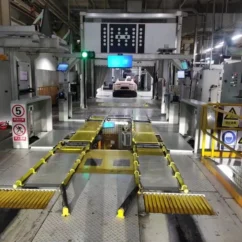
  • Car Four-wheel Alignment

    Car Four-wheel Alignment

    0 out of 5

    We say that car four-wheel alignment is only a maintenance method. In general, if the car does not have any problems, there is no need to do car four-wheel alignment. That is to say, the large car alignment device only needs to do car four-wheel alignment when the car does have problems. Therefore, car four-wheel alignment will not be done on time like maintenance, but should be determined according to the situation. The following situations require four-wheel alignment of a car: 1. When disassembling and replacing automotive chassis components related to adjusting the basic parameters of four-wheel alignment, such as tie rods. 2. When there is abnormal damage to the upper, lower, left, and right tires. 3. When driving in a straight line, the car veers to the left or right. 4. Under safe driving conditions, the steering wheel may sway, shake, or become too heavy. This also requires car owners to pay more attention to the safety driving experience when driving a car, in addition to checking the use of tires. The misalignment of basic parameters for four-wheel alignment of large vehicles is mostly caused by significant damage to the chassis components of the vehicle during long-term driving, especially when the wheels hit the teeth in the aisle, resulting in collision safety accidents, poor real-time ground conditions during long-term driving, etc., which must be paid more attention to. If you don’t feel obvious common problems but still suspect that the wheel alignment is not accurate, you can also do a car four-wheel alignment test. For the major challenge of how often to do it, if there are no obvious common problems, then the “maintenance project” of car four-wheel alignment can be completely eliminated.

  • Chuck Type Four-wheel Alignment Device

    Chuck Type Four-wheel Alignment Device

    0 out of 5

    The purpose of setting the four-wheel positioning parameters is to ensure the stability and maneuverability of the car when it is running straight, ensure that the wheels do not drag, reduce the driving resistance, and reduce tire and suspension wear.

  • Dynamic Four-wheel Alignment Device

    Dynamic Four-wheel Alignment Device

    0 out of 5

    With the continuous development of the automotive industry, the safety and comfort of vehicles have become the focus of consumer attention. Four wheel alignment, as an important technology to ensure vehicle driving stability, is gradually receiving attention. In the field of four-wheel alignment technology, the dynamic four-wheel alignment instrument has become a leader in the industry due to its high precision and real-time performance. What is a dynamic four-wheel alignment device? Dynamic four-wheel alignment instrument is a high-tech device used to measure and adjust the four-wheel alignment parameters of automobiles. Unlike traditional static four-wheel alignment devices, dynamic four-wheel alignment devices can monitor and adjust the positioning parameters of the wheels in real time during vehicle operation. This technology not only improves the accuracy of measurement, but also better reflects the state of the vehicle under actual driving conditions. The working principle of a dynamic four-wheel alignment device is that it mainly collects real-time data on the angle, position, and motion trajectory of the wheels through sensors and cameras installed on the vehicle. These data are transmitted wirelessly to the computer system and processed through complex algorithms to generate the four-wheel alignment parameters of the vehicle. Technicians can make corresponding adjustments and corrections based on these parameters. Advantages of Dynamic Four Wheel Aligner High precision: The dynamic four-wheel alignment instrument can collect real-time data during vehicle operation, avoiding potential errors in static measurements and improving measurement accuracy. Real time performance: Due to the ability to monitor the vehicle’s status in real time, the dynamic four-wheel alignment device can be adjusted during the vehicle’s driving process to ensure that the vehicle is always in the best condition. Comprehensiveness: The dynamic four-wheel alignment instrument can not only measure traditional four-wheel alignment parameters (such as toe in, camber angle, etc.), but also monitor the vehicle’s dynamic parameters (such as sideslip angle, steering angle, etc.), providing more comprehensive vehicle status information. Application of Dynamic Four Wheel Alignment Instrument Dynamic four-wheel alignment devices are widely used in fields such as automobile manufacturing, maintenance, and upkeep. In the process of automobile manufacturing, dynamic four-wheel alignment instruments can be used for factory inspection of new cars to ensure that the four-wheel alignment parameters of the vehicle meet the standards. During the repair and maintenance process, the dynamic four-wheel alignment device can help technicians quickly diagnose and solve the four-wheel alignment problem of the vehicle, improving maintenance efficiency and quality. epilogue As an advanced automotive inspection equipment, dynamic four-wheel alignment devices are gradually replacing traditional static four-wheel alignment devices due to their advantages of high precision, real-time performance, and comprehensiveness. With the continuous advancement of technology, dynamic four-wheel alignment devices will play an increasingly important role in the automotive industry, safeguarding the safety and comfort of vehicles.

  • Electric Chassis Dynamometer

    Electric Chassis Dynamometer

    0 out of 5

    As a high-precision test equipment, it is widely used in many fields, including automobile manufacturing, scientific research institutions, education and training, environmental protection testing and so on. Its versatility and high precision make it an ideal tool for testing and evaluating the dynamic performance of various vehicles. In the field of automobile manufacturing, electric chassis dynamometer is an indispensable equipment in the development and production of new cars. By using dynamometer, automobile manufacturers can conduct a comprehensive dynamic performance test of new models, including engine output power, torque, fuel economy and emission characteristics. Through these test data, engineers can optimize the design of engine and transmission system and improve the overall performance and reliability of vehicles. In addition, the electric chassis dynamometer is also used for quality control on the production line to ensure that every vehicle leaving the factory meets the design standards and performance requirements. Scientific research institutions are another important application field of electric chassis dynamometer. Various scientific research projects need to conduct in-depth research on the dynamic performance of vehicles in order to explore new technologies and materials. The electric chassis dynamometer provides accurate test data to help researchers verify the theoretical model and experimental results. For example, in the research of electric vehicles and hybrid vehicles, dynamometer can simulate different driving conditions, evaluate the performance of batteries and motors, and provide scientific basis for the development of new technologies. Education and training institutions also widely use electric chassis dynamometer for teaching and training. Through the actual operation of dynamometer, students can deeply understand the working principle and performance characteristics of vehicle power system and master the basic skills of testing and analysis. This not only improves students’ practical ability, but also lays a solid foundation for their future career development. In addition, training institutions can also conduct skills assessment through dynamometer to evaluate students’ operational level and theoretical knowledge. Environmental protection detection is another important application field of electric chassis dynamometer. With the increasingly stringent environmental regulations, vehicle emission detection has become an essential link. Electric chassis dynamometer can simulate the driving state of vehicles under different working conditions and accurately measure the types and concentrations of emissions. Through these data, the environmental protection department can evaluate the environmental performance of vehicles and ensure that they comply with relevant regulations and standards. To sum up, electric chassis dynamometer is widely used in automobile manufacturing, scientific research institutions, education and training, environmental protection testing and other fields. Its high precision and versatility make it an ideal tool for testing and evaluating the dynamic performance of various vehicles, which provides important technical support for the development of various industries.

  • Gantry Pass Type Wheel Alignment

    Gantry Pass Type Wheel Alignment

    0 out of 5

    Rapid measurement of hub eccentricity and deformation problems: The traditional truck locator must pass the infrared beam and match the steel rule to manually measure hub eccentricity and deformation. The process is very tedious and takes more than twice as long as this product.

  • High-end car Inspection Line

    High-end car Inspection Line

    0 out of 5

    In the modern automobile industry, as an advanced detection equipment, the non-contact four-wheel locator is gradually receiving extensive attention in the market. With the increase of car ownership and the improvement of consumers’ requirements for vehicle safety performance, the market demand for non-contact four-wheel aligners has shown a significant growth trend. First of all, with the improvement of people’s living standards, cars have become a necessity for families. Vehicle safety and comfort have become the focus of consumer attention, and four-wheel positioning as an important factor affecting vehicle driving stability and tire life, more and more attention. The traditional contact four-wheel locator may cause certain wear to the tires and wheels during operation, while the non-contact four-wheel locator realizes the non-destructive testing of the vehicle through advanced sensing technology. This feature makes the non-contact four-wheel locator have a clear competitive advantage in the market. Secondly, the rapid development of the automotive maintenance industry has also promoted the market demand for non-contact four-wheel aligners. With the continuous progress of automobile technology, vehicle structure and suspension system have become more complex, and traditional detection equipment is difficult to meet the detection needs of modern vehicles. With its high precision and high efficiency, the non-contact four-wheel positioning instrument can quickly and accurately complete the four-wheel positioning detection of the vehicle, which greatly improves the maintenance efficiency and reduces the labor cost. Therefore, more and more automobile maintenance enterprises have begun to introduce non-contact four-wheel aligners to improve service quality and competitiveness. In addition, the promotion of policies and regulations is also an important factor in the growth of non-contact four-wheel positioning device market demand. Many countries and regions have issued relevant regulations, requiring regular four-wheel positioning detection of vehicles to ensure the safety of vehicles. The implementation of this policy has further promoted the market demand for non-contact four-wheel aligners. In summary, the growth in demand for non-contact four-wheel aligners in the market is mainly due to consumers’ attention to vehicle safety performance, the development of the automotive maintenance industry and the promotion of policies and regulations. With the continuous progress of technology and the continuous expansion of the market, the non-contact four-wheel locator will have a broader space for development in the future.

  • High-end car Inspection Line

    High-end car Inspection Line

    0 out of 5

    In the modern automobile industry, as an advanced detection equipment, the non-contact four-wheel locator is gradually receiving extensive attention in the market. With the increase of car ownership and the improvement of consumers’ requirements for vehicle safety performance, the market demand for non-contact four-wheel aligners has shown a significant growth trend. First of all, with the improvement of people’s living standards, cars have become a necessity for families. Vehicle safety and comfort have become the focus of consumer attention, and four-wheel positioning as an important factor affecting vehicle driving stability and tire life, more and more attention. The traditional contact four-wheel locator may cause certain wear to the tires and wheels during operation, while the non-contact four-wheel locator realizes the non-destructive testing of the vehicle through advanced sensing technology. This feature makes the non-contact four-wheel locator have a clear competitive advantage in the market. Secondly, the rapid development of the automotive maintenance industry has also promoted the market demand for non-contact four-wheel aligners. With the continuous progress of automobile technology, vehicle structure and suspension system have become more complex, and traditional detection equipment is difficult to meet the detection needs of modern vehicles. With its high precision and high efficiency, the non-contact four-wheel positioning instrument can quickly and accurately complete the four-wheel positioning detection of the vehicle, which greatly improves the maintenance efficiency and reduces the labor cost. Therefore, more and more automobile maintenance enterprises have begun to introduce non-contact four-wheel aligners to improve service quality and competitiveness. In addition, the promotion of policies and regulations is also an important factor in the growth of non-contact four-wheel positioning device market demand. Many countries and regions have issued relevant regulations, requiring regular four-wheel positioning detection of vehicles to ensure the safety of vehicles. The implementation of this policy has further promoted the market demand for non-contact four-wheel aligners. In summary, the growth in demand for non-contact four-wheel aligners in the market is mainly due to consumers’ attention to vehicle safety performance, the development of the automotive maintenance industry and the promotion of policies and regulations. With the continuous progress of technology and the continuous expansion of the market, the non-contact four-wheel locator will have a broader space for development in the future.

  • Non-contact Four-wheel Locator

    Non-contact Four-wheel Locator

    0 out of 5

    The non-contact four-wheel positioning instrument is a special device used to measure and adjust the wheel positioning of the assembled vehicle. Through the positioning instrument, the four-wheel positioning of the vehicle is located and measured/judged to ensure that the wheel positioning meets the design parameters and requirements.
    Wheel weight, toe in and camber of wheels, inspection of main pin camber, camber, thrust angle, and maximum steering angle, calibration of toe in and camber, automatic collection and calibration of wrench torque to a specified database, and optional wheel arch inspection function.
    Innovative advantages: Exclusive invention patents leading the world, side cameras added to the front wheels and targets added to the rear wheels, automatic calibration of the zero point value of the rear wheel sensors after changing the wheelbase, eliminating initial errors and ensuring accurate measurement results.
    Exclusive innovative wheelbase adjustment mechanism ensures that the wheel rotation center coincides with the drum group rotation center, accurately measuring the maximum steering angle.

  • Non-contact Four-wheel Locator

    Non-contact Four-wheel Locator

    0 out of 5

    The non-contact four-wheel positioning instrument is a special device used to measure and adjust the wheel positioning of the assembled vehicle. Through the positioning instrument, the four-wheel positioning of the vehicle is located and measured/judged to ensure that the wheel positioning meets the design parameters and requirements.
    Wheel weight, toe in and camber of wheels, inspection of main pin camber, camber, thrust angle, and maximum steering angle, calibration of toe in and camber, automatic collection and calibration of wrench torque to a specified database, and optional wheel arch inspection function.
    Innovative advantages: Exclusive invention patents leading the world, side cameras added to the front wheels and targets added to the rear wheels, automatic calibration of the zero point value of the rear wheel sensors after changing the wheelbase, eliminating initial errors and ensuring accurate measurement results.
    Exclusive innovative wheelbase adjustment mechanism ensures that the wheel rotation center coincides with the drum group rotation center, accurately measuring the maximum steering angle.

  • Non-contact Laser Locator

    Non-contact Laser Locator

    0 out of 5

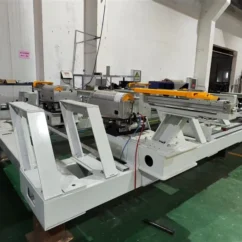
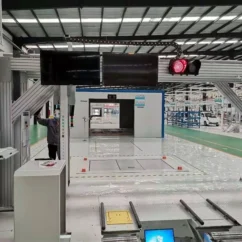
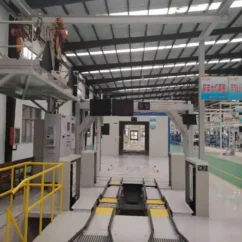
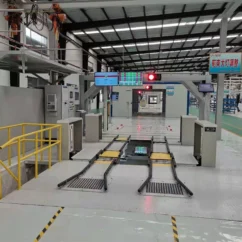
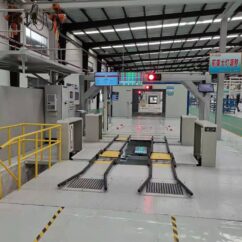
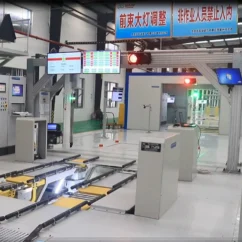
    The non-contact four-wheel locator is an advanced automotive diagnostic device that uses laser and sensor technology to measure four-wheel positioning data without contact with the car tire or steel rim. Its main components include model and function selection device, ground operation display, 3D laser CCD sensor assembly, pit display device, pit lighting and ventilation device, vehicle centering device, vehicle positioning device, wheelbase adjustment device, driving guidance device, PLC electrical control cabinet, steering wheel positioning device, computer hardware and software system, etc ‌. Compared with the traditional four-wheel locator, this device has higher measurement efficiency and lower failure rate, while avoiding damage to the rim in the measurement process, reducing the work intensity and improving the measurement accuracy ‌. The launch of the non-contact four-wheel positioning instrument marks the further development of automotive diagnostic technology and indicates the change of the future automotive maintenance industry ‌.

  • Non-contact Type Wheel Alignment

    Non-contact Type Wheel Alignment

    0 out of 5

    The equipment is a special equipment used to measure and adjust the wheel positioning of the assembled vehicle. It locates and measures/judges the four wheels of the vehicle through the positioning instrument to ensure that the wheel positioning meets the design parameters and requirements.According to the model 18-bit code to determine the model, the software can set whether to adjust the rear wheel, and directly adjust the front wheel for the model that does not need to adjust the rear wheel; For models that need to adjust both front and rear wheels, adjust the front wheels after completing the rear wheel adjustment.

  • position indicator

    position indicator

    0 out of 5

    The century-old evolution of four-wheel aligners: from cable to non-contact From the cable positioning in 1915 to the present non-contact four-wheel positioning device, the development of four-wheel positioning technology has experienced a century of changes. Let’s review the process. 1️⃣ 1915: The initial four-wheel positioning was using a cable positioning, which took longer and was less accurate. 2️⃣ Light locator: With the progress of technology, light locator has gradually replaced the cable positioning, improving the speed and accuracy of measurement. 3️⃣ cable computer locator: Into the computer era, the appearance of cable computer locator makes four-wheel positioning more intelligent and efficient. 4️⃣ laser positioning: with the introduction of laser technology, the accuracy and speed of four-wheel positioning have been improved again. 5️⃣ CCD positioning: The use of CCD technology makes the measurement of four-wheel positioning more accurate and stable. 6️⃣ 3D positioning: The application of 3D technology makes the four-wheel positioning can be more comprehensive measurement and analysis. 7️⃣ non-contact four-wheel locator: the latest non-contact four-wheel locator is not only fast, but also more accurate, which provides great convenience for vehicle repair and maintenance. From the initial cable positioning to the current non-contact four-wheel positioning device, the development of four-wheel positioning technology not only improves the efficiency of measurement, but also improves the accuracy of measurement, and provides important technical support for vehicle maintenance and maintenance.

  • Single-axis Contact Wheel Alignment

    Single-axis Contact Wheel Alignment

    0 out of 5

    Wheel rotation simulation driving state: the detection results are consistent with road driving.
    Save manpower, do not need to manually install four rounds of fixtures

  • Two-axis Contact Wheel Alignment

    Two-axis Contact Wheel Alignment

    0 out of 5

    On the basis of the non-contact 3D laser four-wheel positioning instrument, only the laser measuring device is only replaced with the roller contact measuring device, which reduces the cost and solves the objective demand of some vehicle production enterprises for suitable positioning platform.