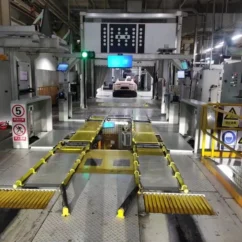
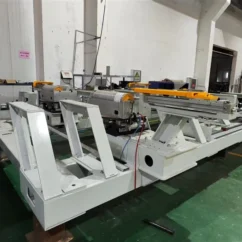
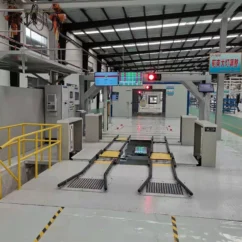
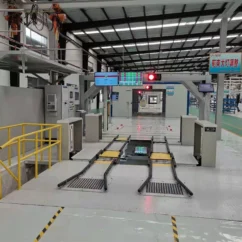
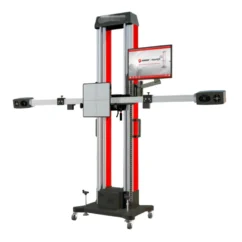
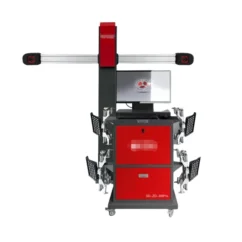
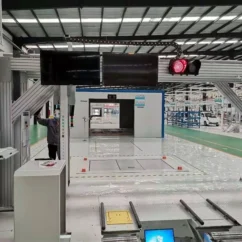
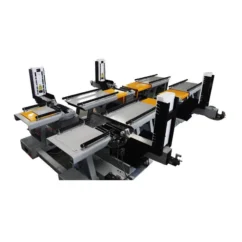
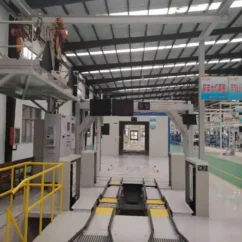
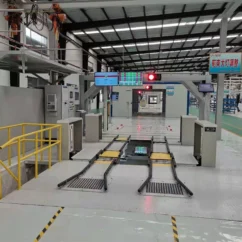
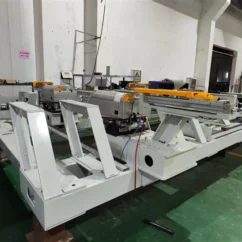
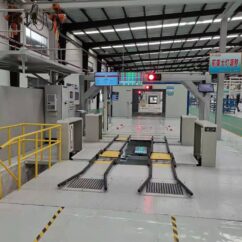
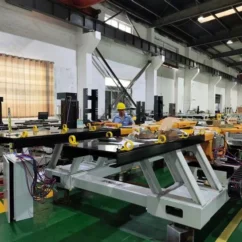
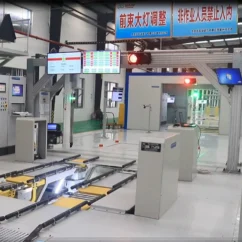
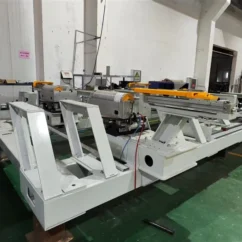
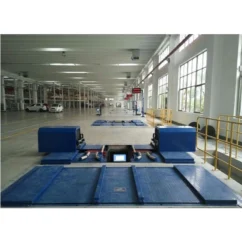
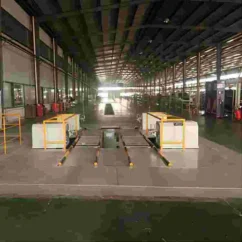
The detection deviation of the dynamic four-wheel locator is large, and it can be calibrated and adjusted from the equipment’s own calibration, installation and debugging, as well as external environment and vehicle factors to restore accuracy. The specific methods are as follows: Equipment calibration 1. Calibrate the sensor Check the accuracy of the sensor: Use professional calibration tools, such as standard measuring blocks or calibration fixtures, to check the accuracy of the sensor. Connect the sensor with the calibration tool according to the specified way, and observe whether the output value of the sensor is consistent with the standard value. If there is any deviation, it can be adjusted or re-calibrated according to the equipment manual. Clean and maintain the sensor: regularly clean the dust, oil and debris on the surface of the sensor to prevent it from affecting the transmission and reception of signals. For optical sensors, pay special attention to cleaning the lens to ensure smooth transmission of light. For contact sensors, check whether the probe is worn, and replace it in time if it is worn. 2. Measurement system calibration Zero point calibration: After the device is turned on, perform zero point calibration according to the requirements of the operation manual. Usually, the vehicle is parked on a horizontal lifting platform, so that the wheels are in a natural state, and then the device software is operated to zero the measurement values of the various sensors to eliminate the initial error of the system. Angle calibration: Calibrate the measurement Angle of the four-wheel locator using a standard Angle calibration instrument. The calibrator is mounted on the wheel, and in conjunction with the sensor, the equipment parameters are adjusted so that the measured Angle value is consistent with the standard Angle value of the calibrator. Length calibration: For four-wheel aligners using laser or ultrasonic measurement of wheel base, wheelbase and other length parameters, it is necessary to use a standard length calibration rod for calibration. Place the calibration rod in the specified position, and the length measured by the device should be consistent with the actual length of the calibration rod. Otherwise, it needs to be adjusted. Installation and commissioning 1. Check the installation position Lift level check: Use a level to check the levelness of the lift to ensure that the lift is level in all directions. If the lifting platform is not level, it will cause the vehicle to be tilted during the detection, affecting the measurement results. The lifting platform can be levelled by adjusting its support feet or hydraulic system. Sensor installation check: Check whether the sensor is firmly installed on the wheel and whether the position is correct. The sensor should be perpendicular to the center plane of the wheel, and the installation Angle should meet the requirements of the device. The mounting bolt should be tightened to prevent the sensor from displacing during detection. 2. Set device parameters Vehicle parameter input: According to the actual model, frame number, tire specifications and other information of the vehicle to be detected, accurately input into the software system of the four-wheel locator. The four-wheel positioning parameters of different models are different, and the correct input of vehicle parameters is the basis to ensure the accuracy of detection results. Measurement mode selection: According to the type of vehicle and detection needs, select the appropriate measurement mode. For example, for ordinary cars and commercial vehicles, their measurement patterns and parameter standards may be different. Some devices also have measurement modes for different suspension system types, which should be selected according to the actual situation. Environmental and vehicle factors check 1. Check the environment Site flatness: Ensure that the ground of the test site is smooth and there is no obvious uneven or slope. Uneven site will cause the vehicle to produce additional tilt and displacement during detection, affecting the measurement accuracy. If the site is not level, the ground can be repaired or other level site can be selected for testing. Light and electromagnetic environment: The test site should avoid direct light and strong electromagnetic interference. Strong light may interfere with the work of the optical sensor, and strong electromagnetic signals may affect the communication between the sensor and the device. You can take shading measures or adjust the device position to avoid strong light and electromagnetic interference sources. 2. Vehicle status check Tire status: Check whether the pressure of the tire meets the standard, whether the tire wear is uniform, and whether the tire surface is damaged. Insufficient or excessive tire pressure will deform the tire and affect the positioning parameters of the wheel. Uneven tire wear can cause the wheel to jitter when turning, making the measurement data inaccurate. The tire pressure should be adjusted to the standard value, and the tires with serious wear or damage should be replaced in time. Chassis component inspection: Check whether the suspension system, steering system, ball and other components of the vehicle chassis are loose, deformed or damaged. The failure of these components can cause changes in the positioning parameters of the wheel. If the chassis parts are found to have problems, they should be repaired or replaced in time, and then four-wheel positioning detection.